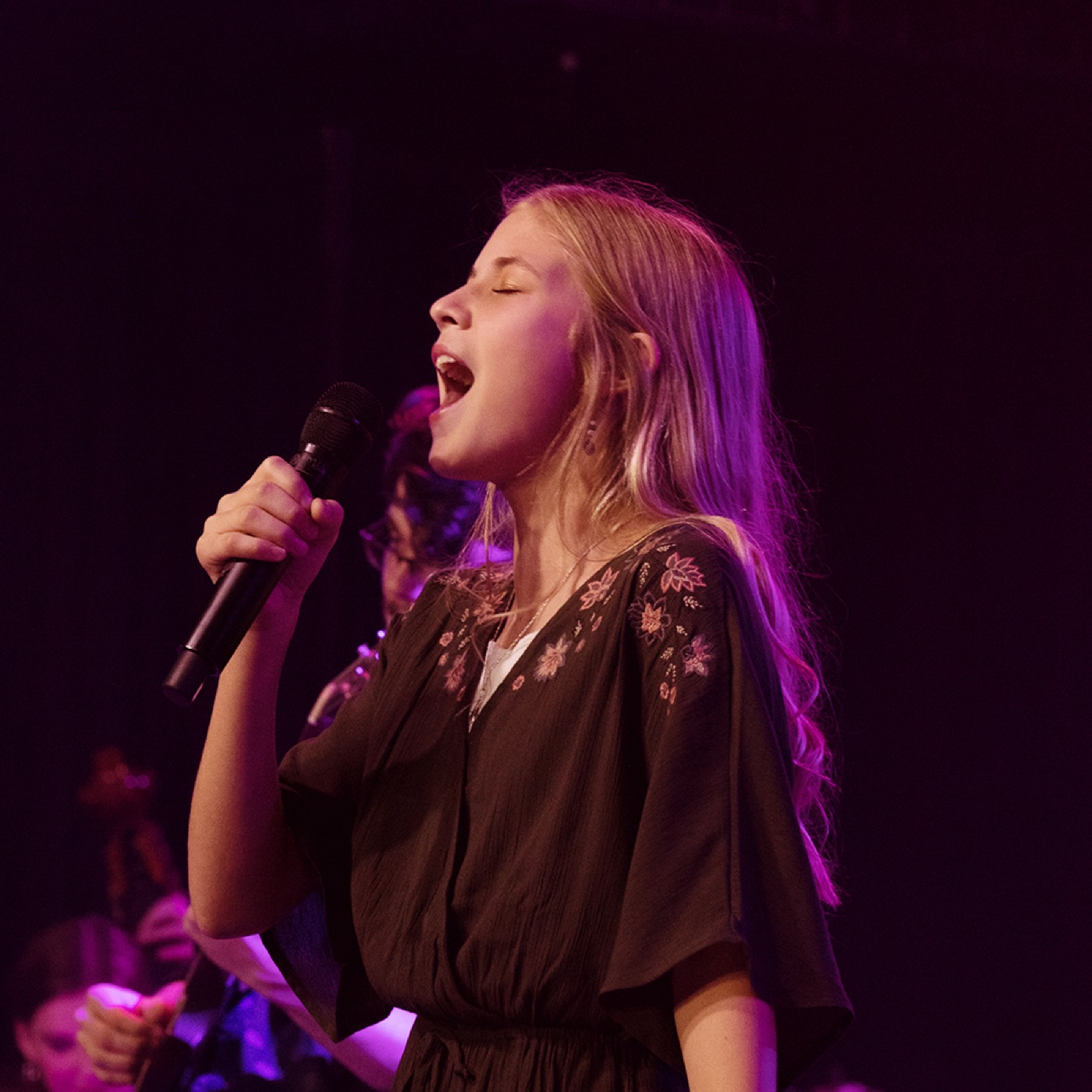
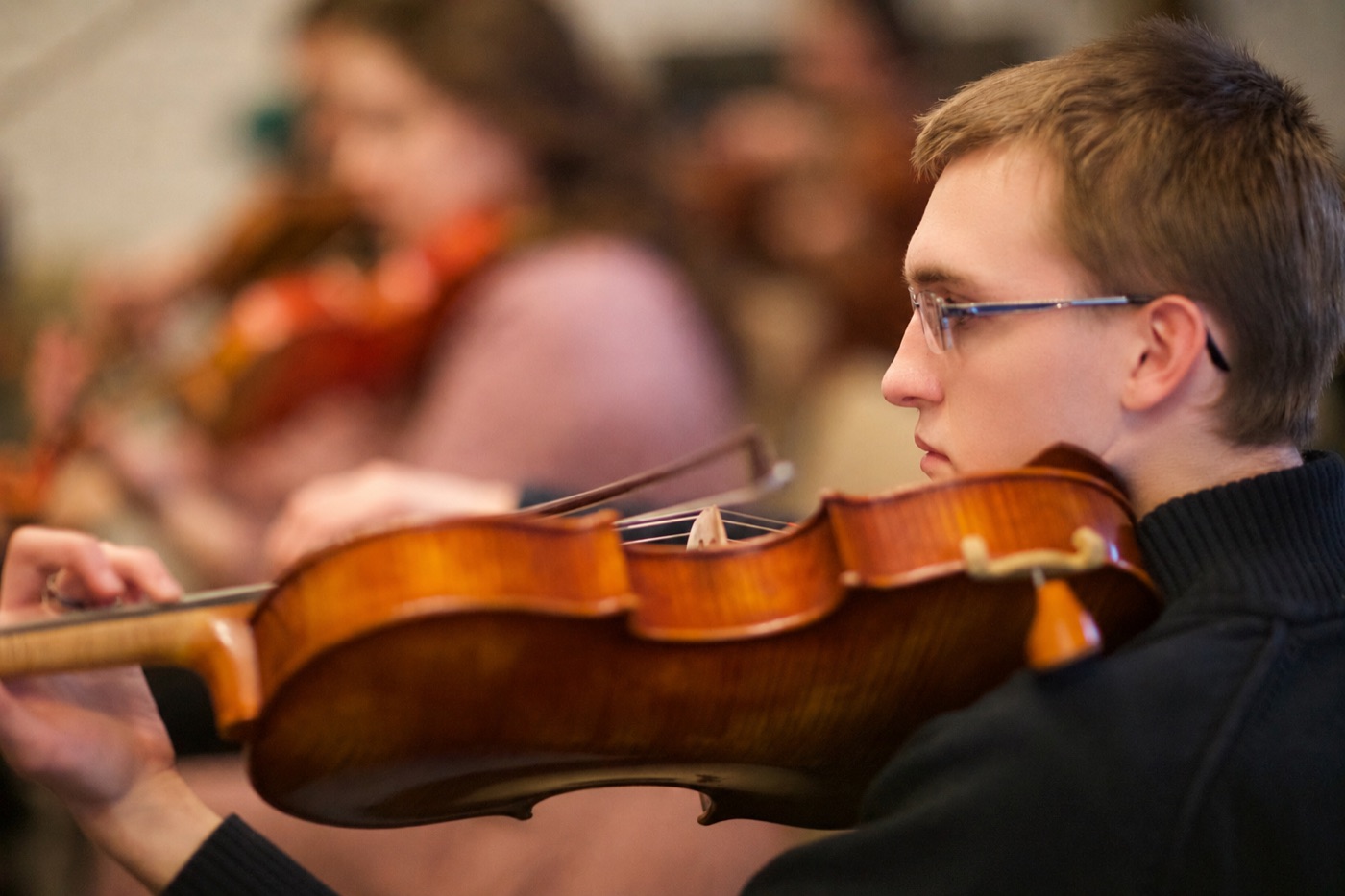
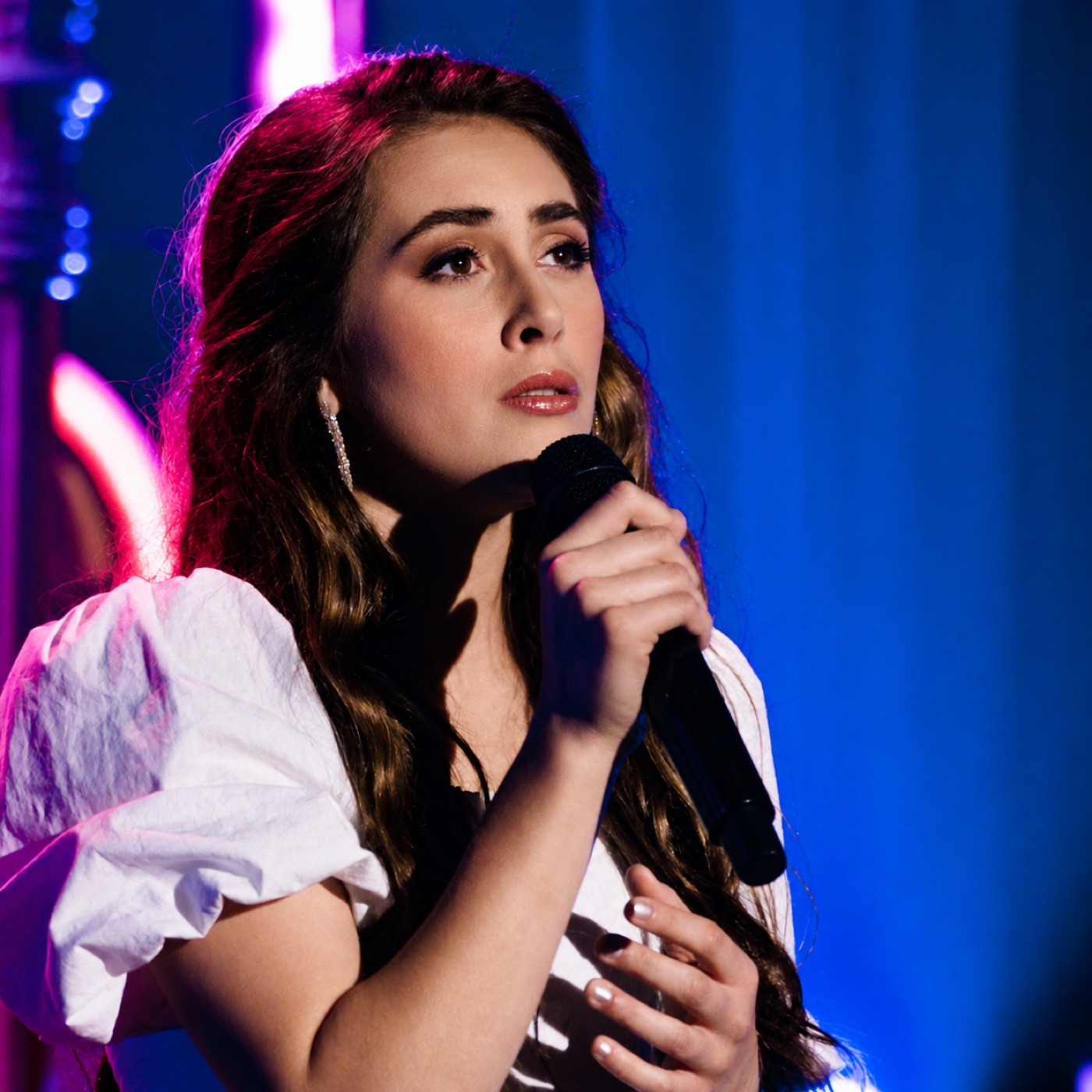
The Annie Moses Method is the Conservatory's pedagogy in its working form — a way of teaching music as a language to be lived in, not a skill to be acquired. A student who studies here learns the grammar of the art (theory, harmony, form), the speech of it (technique on the instrument, voice), and — what conservatory training too often leaves unfinished — the substance and the delivery: how to write, how to notate, how to inhabit a piece dramatically, how to move on a stage, how to walk into a studio and record. Drama, dance, voice, theory, instrument, and rhythm lab are not enrichments around the edges of the major study. They are the major study, because fluency in music requires all of them at once.
The aim is a musician who can hang out a shingle and mean it — someone who can compose a piece, notate it cleanly, understand the genre it belongs to, rehearse an ensemble through it, and perform it well enough to record. The same conviction that shapes the Annie Moses Band's repertoire shapes the teaching: classical rigor and vernacular tradition are not opposed, and a serious musician learns to move between them. We train students to think across styles — conservatory violin and fiddle tune, art song and gospel, written score and stage feel — and to do so within a God-centered vision of what music is for and what a musician is in the culture. The interdisciplinary work (rhythm lab pairing piano with drums, the drama room next to the practice room) is the structural expression of that conviction: an artist is formed in the company of other artists and other disciplines, not in isolation.
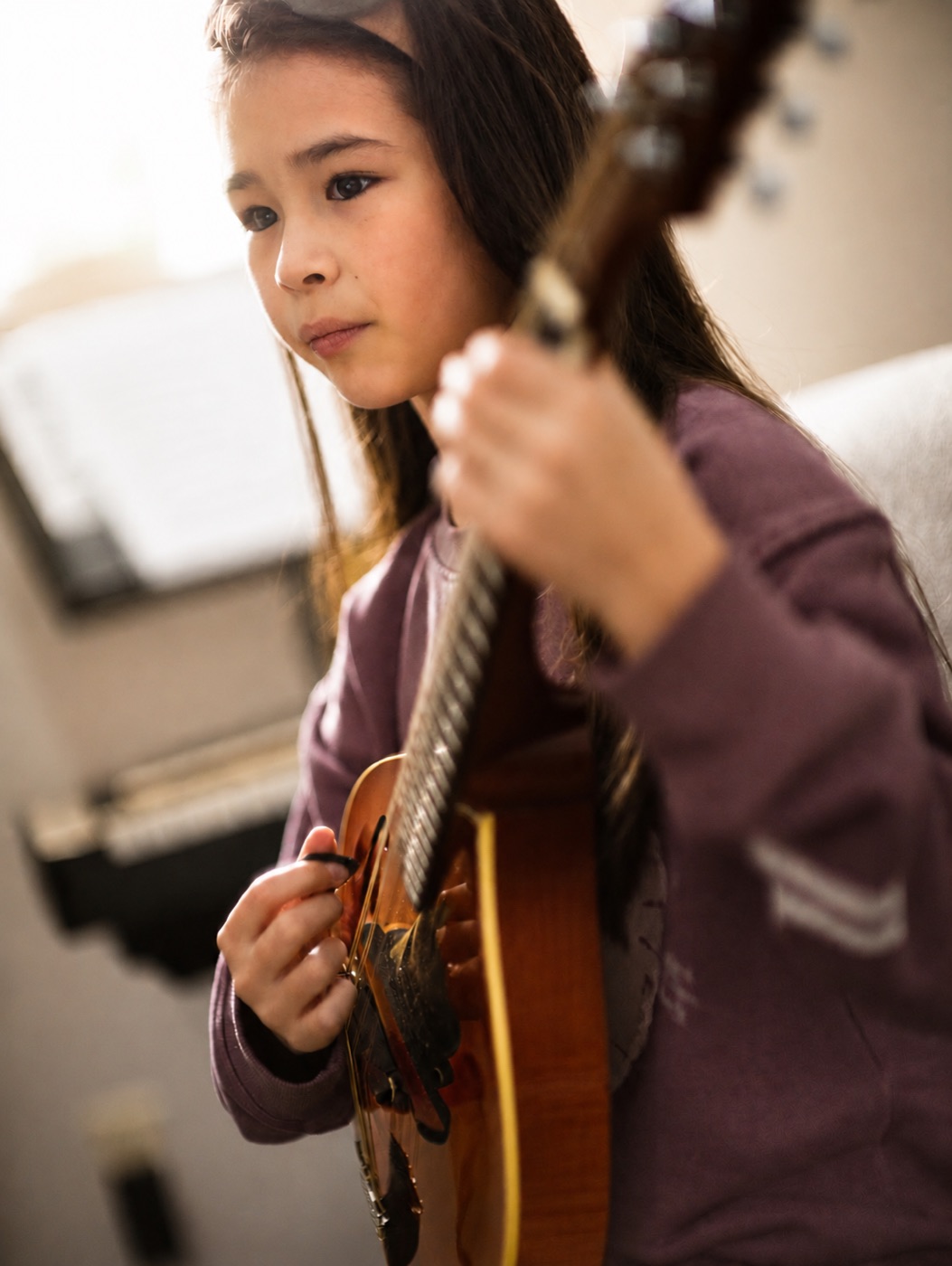 Foundation Studio